The 4-Hour Rule: Why Temperature Control is the Fine Line Between Safety and Disaster
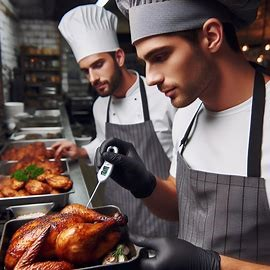 In the restaurant industry, we live and die by the thermometer. While recipes and plating are what bring customers in, proper holding temperatures are what keep them safe—and keep your doors open.
Most foodborne illnesses aren’t caused by bad luck; they are caused by time-temperature abuse. As a restaurant manager, understanding the science behind the “Danger Zone” isn’t just a regulatory hoop to jump through. It is your first line of defense against a public health crisis that could destroy your business’s reputation in a single afternoon.
The Danger Zone: A Bacterial Breeding Ground
The Temperature Danger Zone is the range between 41°F and 135°F. In this sweet spot, pathogens like Salmonella, E. coli, and Listeria don’t just survive—they thrive. In fact, under the right conditions, bacteria can double in number every 20 minutes.
This is why the FDA Food Code is so strict about hot and cold holding:
-
Cold food must be held at 41°F or lower.
-
Hot food must be held at 135°F or higher.
Anywhere in between, you are playing with fire.
The 4-Hour Rule Explained
The most critical metric in food safety is the 4-Hour Rule. Research shows that it takes roughly four hours for bacteria in the Danger Zone to multiply to dangerous, illness-causing levels.
If Time/Temperature Control for Safety (TCS) food—like meats, dairy, cooked rice, or cut melons—sits in the Danger Zone for more than four hours, it must be thrown out. There is no “heating it back up” to kill the toxins that some bacteria produce. Once that 4-hour clock runs out, the food is trash.
Serving food that has been temperature-abused isn’t just a health code violation; it is a liability that can lead to lawsuits, massive fines, and the permanent loss of customer trust.
Get Certified with the Best in the Nation
Knowing the 4-hour rule is one thing. Mastering the thousands of other details required to run a safe, compliant kitchen is another. That is where Ace Restaurant Manager Training comes in.
We are the nation’s premier provider of food safety training, and we are changing the way the industry gets certified. Whether you need online self-paced study, live webcasts, or in-person training, we offer the most flexible solutions to fit your busy schedule.
Why We Are Better Than ServSafe
For years, people thought ServSafe was the only option. It’s not. In fact, thousands of managers are switching to Ace Restaurant Manager Training because we offer a superior experience that respects your time and your budget.
1. A Better Price
Why pay a premium for a brand name when the requirement is the accreditation? We provide the exact same regulatory compliance at a significantly better price. We believe safety shouldn’t break the bank.
2. A Shorter, Efficient Test
Time is money in this industry. Our exam is ANAB-Approved and fully satisfies the FDA requirement for Food Protection Manager Certification. But here is the difference: our test is streamlined. It is shorter and more focused than the ServSafe exam, meaning you spend less time stressing over trick questions and more time running your business.
3. Superior Training
We don’t just teach you how to pass a test; we teach you how to manage a kitchen. Our instructors are industry veterans who know what it’s actually like during a Friday night dinner rush. We are currently recruiting the best trainers across the country to ensure that whether you are in a classroom or on a webcast, you are learning from a pro.
4. Instant Results
With our ANAB-approved testing, you get your results immediately. No waiting. No wondering. You pass, you print your certificate, and you are compliant.
The Smart Choice for Food Managers
You have a choice. You can stick with the old, expensive, time-consuming standard, or you can choose the modern, efficient, and affordable solution that is taking the nation by storm.
Secure your FDA-required Food Manager Certification with Ace Restaurant Manager Training today. Save time, save money, and get back to doing what you do best—serving great food safely.
[Click Here to Start Your Training Now]