
The Top 5 Key Risk Factors in Foodborne Illnesses Compliance Standards – The Top 5 Key Risk Factors in Foodborne Illnesses
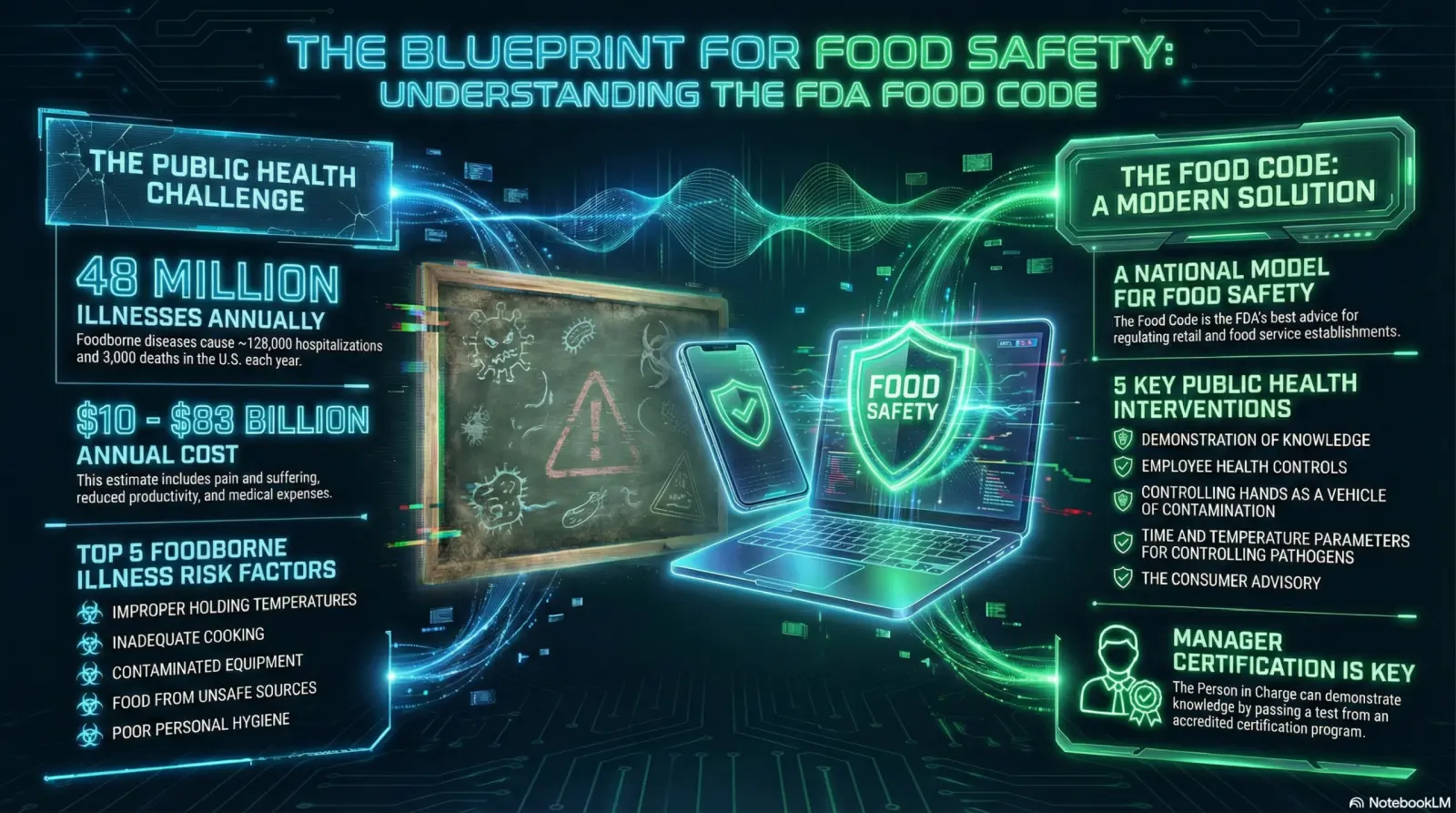
To maintain an ANSI-accredited Food Manager certification, professionals must demonstrate a deep understanding of the current FDA Food Code. This body of knowledge focuses heavily on the five risk factors identified by the CDC as the primary contributors to foodborne illness. Our programs are overseen by Manny Campos, a nationally recognized Food Managers Certification (FMC) Proctor (ID: EDUPR-111709), authorized in all 50 states.
**1. Purchasing Food from Unsafe Sources**
Regulatory compliance begins before food even enters your kitchen. Managers must ensure all ingredients come from approved, reputable suppliers. This involves verifying that the supplier is under regulatory inspection and follows Good Agricultural Practices (GAPs). Accepting unpasteurized dairy or shellfish from unauthorized harvesters can lead to catastrophic health outcomes.
**2. Failing to Cook Food Correctly**
Cooking food to the correct internal temperature is the only reliable way to reduce pathogens to safe levels. Our training emphasizes the specific minimum internal temperatures required for poultry (165°F), ground meats (160°F), and seafood (145°F). Utilizing a calibrated thermometer is a non-negotiable standard in any professional establishment.
**3. Holding Food at Incorrect Temperatures**
The “Temperature Danger Zone” (41°F to 135°F) is the range where bacteria thrive and multiply rapidly. Managers must monitor time and temperature logs to ensure TCS (Time/Temperature Control for Safety) food does not remain in this range for more than four hours. Proper hot holding and cold holding equipment must be maintained daily.
**4. Using Contaminated Equipment (Cross-Contamination)**
Cross-contamination occurs when pathogens are transferred from one surface or food item to another. This often happens when raw proteins contact ready-to-eat foods via shared cutting boards or unsterilized utensils. Rigorous sanitation schedules and color-coded equipment are essential tools for mitigation.
**5. Practicing Poor Personal Hygiene**
Failing to wash hands properly is a leading cause of norovirus and other fecal-oral pathogens. Managers must enforce strict handwashing protocols and employee health policies that prevent symptomatic staff from handling food. The Top 5 Key Risk Factors in Foodborne Ilness
Valid Food Manager Certification in All 50 States
Our training ensures you are prepared for the ANAB-CFP accredited exam regardless of your location. We provide the digital tools and expert oversight needed to manage risk effectively across the United States.
Food Safety
Official Training Credentials:
- ✓ Registered Provider: ACE Restaurant Manager Training
- ✓ Standard: EDUProctor
- ✓ License: EDUPR-111709
- ✓ Training: Nationally Accepted Certification
Frequently Asked Questions
A1: No, this product is a comprehensive training and exam preparation course. It is designed to prepare you for any ANAB-CFP accredited exam (such as FMC, ServSafe, or NRFSP). Because our lead proctor, Manny Campos (ID: EDUPR-111709), maintains strict compliance standards, we provide this training to ensure you have the universal foundation needed to pass your proctored exam at any testing center nationwide.Q2: How do the AI Study Tools help me pass the Food Manager exam?
A2: Our course is powered by the “Kitchen Brain” Study Suite, which includes AI-generated flashcards, adaptive practice tests, and audio summaries. These tools allow you to drill key FDA Food Code temperatures and regulations on your mobile device. By combining Manny Campos’s proctoring expertise with next-gen technology, we help you learn faster and retain more information than traditional textbooks allow.Q3: Is the training based on the most current FDA Food Code?
A3: Yes. This course is built strictly on the current national FDA Food Code standards. Unlike outdated training materials, our curriculum is updated to reflect exactly what health inspectors are looking for today. As an approved FMC Proctor (License: EDUPR-111709), Manny Campos ensures that all course content meets the rigorous requirements for national Food Protection Manager certification across all 50 states.